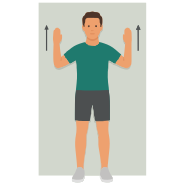
Upper back
Wall angels
: stand with your back against a wall, arms in a goalpost shape, and slide them up and down 8 times while keeping your lower back and head close to the wall.
8 timesIt is 4 in the afternoon and your chin is closer to the screen than it was at 9. The base of your skull is tight, your shoulders are up by your ears, and you have probably typed neck pain yoga or tech neck stretches into a search bar more than once. This guide gives you the actual moves, in order, with no equipment.
Forward head posture is not a flaw in you. It is what a neck does after years of screens placed below eye level. The muscles at the back of your neck get overworked and tight, and the ones that should hold your head back get lazy.
So the plan has 2 halves. First you loosen what is tight, with stretches and a few yoga shapes. Then you wake up what has switched off, with a short routine of exercises. The whole thing takes about 10 minutes, and most of it works at a desk.
When you look down at a screen for hours, your head slides forward a little at a time. The muscles at the back of your neck work overtime to hold it there, while the muscles at the front of your neck and across your chest slowly shorten. That combination is what people call tech neck or text neck.
The stiffness you feel by the end of the day is mostly those overworked muscles asking for a break. That is why sitting up straight through willpower alone never lasts. The moment you stop thinking about it, the tight muscles pull you back into the old shape.
You do not need to force good posture all day. You need muscles that make better posture the easy option, and that is what the routine below is for.
Before any stiff neck exercises, spend a minute or 2 just moving. A stiff neck workout should never start with force. Go only as far as feels fine, and slow down if anything pinches.
That is the whole warm-up. If your neck is very stiff, this alone can take the edge off before you even get to the main exercises.
Upper back
: stand with your back against a wall, arms in a goalpost shape, and slide them up and down 8 times while keeping your lower back and head close to the wall.
8 times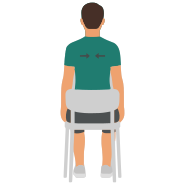
Upper back
: pull your shoulder blades back and down, as if tucking them into your back pockets. Hold 5 seconds, repeat 10 times.
10 times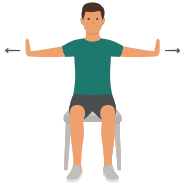
Chest
: forearm on a door frame, step through gently until you feel a stretch across the chest. Hold 20 seconds each side.
20 secondsIf you only have time for 1 thing today, do the chin tucks. Everything else supports that move.
These are the sore neck stretches that reach the muscles doing all the extra holding. Hold each one for 20 to 30 seconds, breathe normally, and never pull hard. A stretch should feel like tension leaving, not like pain arriving.
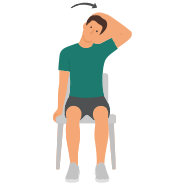
Neck
: sit on 1 hand, tip the opposite ear toward that shoulder, and let the weight of your head do the work. You will feel it along the side of your neck.
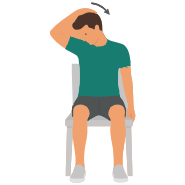
Neck
: turn your head 45 degrees, then drop your chin toward your armpit. A gentle hand on the back of your head adds a little weight. This reaches the muscle that runs from your neck to your shoulder blade.
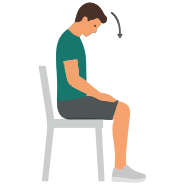
Neck
: clasp your hands behind your head and let your chin fall toward your chest, elbows heavy. Do not press, just let gravity work on the back of your neck.
Do the full set once a day, and repeat any single stretch whenever your neck starts to complain during work.
You do not need a 60 minute class or a mat by the window. Most text neck yoga comes down to a handful of shapes that stretch the same chain of muscles, from the base of your skull to your upper back. String these together and you have a 5 minute stiff neck yoga flow.
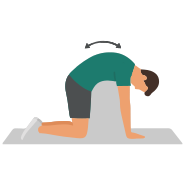
Upper back
: on hands and knees, alternate between arching your back and rounding it, letting your head follow the movement. 8 slow rounds. This gets the whole spine moving, not just the neck.
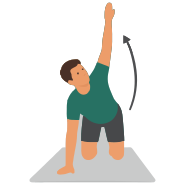
The drawing shows the basic version of the move.
Upper back
: from hands and knees, slide 1 arm under your body until your shoulder and ear rest on the floor. Hold 20 seconds each side. This reaches the upper back, where a lot of neck tension actually lives.
20 seconds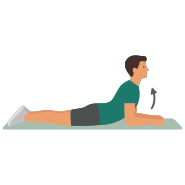
Lower back
: lie on your belly, prop yourself on your forearms, and let your chest open while your gaze stays forward. Hold for 5 slow breaths.
: sit back on your heels, arms stretched forward, forehead toward the floor. Rest here for 5 breaths to finish.
5 breathsMove slowly and let your breath set the pace. If any shape bothers your neck, skip it. Nothing in this flow is mandatory.
The routine loosens and strengthens, but your setup decides whether your head drifts forward again by lunchtime. A few changes cost nothing and do a lot of the work for you.
A photo of yourself working, taken from the side by a colleague or a timer, tells you more about your real posture than any mirror check you do on purpose.
When this is not for you and it is time to see a healthcare professional. This guide is for everyday stiffness and discomfort from desk work and screens. Stop the exercises and see a healthcare professional if you notice any of these signs: pain that runs down an arm, tingling or numbness in your hands, loss of strength or grip, neck pain after a blow or a fall, pain that keeps you from sleeping, dizziness that comes with the neck pain, or 2 to 3 weeks of doing the routine without any change at all.
Do not try to do everything on this page every day. That plan dies by Thursday. Start with the smallest version and let it grow.
Your head took years to drift forward, so give the way back some weeks. The chin tucks will feel odd at first. That is just muscles being asked to do a job they had stopped doing.
BackPain gives you 5 minutes of gentle exercises a day, chosen by where it bothers you and what you are after. At home, no equipment, guided one at a time. If there are exercises you like more, build your own routines with them: the best exercise is the one you will actually do.


7-day free trial · Cancel anytime
Gentle yoga shapes like cat-cow, thread the needle and child's pose stretch the same muscles that get tight from screen work, and many people find they ease the discomfort. Move slowly, skip anything that pinches, and make it part of a routine rather than a one-off. If pain sticks around for weeks, see a healthcare professional.
Little and often beats 1 long session. Do the chin tucks and stretches once a day, and sprinkle 5 chin tucks through your work hours. The full routine takes about 10 minutes, so it fits before work or in a lunch break.
There is no fixed timeline, and anyone who gives you an exact number is guessing. What is true for most people is that the stiffness eases faster than the posture changes, so let comfort be your first marker. Stay consistent for some weeks before judging the rest.
Yes, almost everything here except the floor-based yoga works in a chair. The chin tucks, the shoulder rolls and the 3 stretches need no space and no equipment. That is the point: the moves have to fit where the stiffness happens.
A pillow that pushes your head too far up or lets it fall too far down keeps neck muscles working all night. Your pillow should hold your head in line with your spine, whether you sleep on your back or your side. Morning stiffness that fades with the warm-up is common, but stiffness that comes with tingling or arm pain is a sign to see a healthcare professional.
BackPain is a wellness app, not a medical device. This guide is general information and is no substitute for a healthcare professional. It does not diagnose, treat, cure or prevent any condition. If your pain persists, see a healthcare professional.