Shoulder rolls
Standing, roll both shoulders up, back and down, slowly. 10 rolls. This resets the rounded-forward default.
You catch your reflection in a shop window mid-stride and you do not love it. Head forward, shoulders rounded, and the old advice to stand up straight lasts about 10 steps before you forget it. Walking posture is one of those things everyone mentions and almost nobody explains properly.
Here is the honest version. There is no single perfect way to walk, and slouching while you walk is not the villain it is made out to be. But walking taller usually feels better, breathing gets easier, and the walk itself becomes the thing that loosens a stiff back after a day in a chair.
This guide covers what good posture when walking actually looks like, how to change walking posture with cues that survive past the first block, and the short exercises that make the whole thing feel natural instead of forced.
Forget the soldier image. Good walking posture is not rigid, it is stacked and relaxed. Think of it as a tall, loose walk, not a stiff one.
If walking tall feels like hard work, you are forcing it. The goal is long and relaxed, not tense and held.
Yes, but not the way most people expect. Walking does not reshape your spine into some ideal curve, because there is no single ideal curve. What walking does is break up the long hours of sitting still, and stillness is what leaves you stiff, heavy and curled forward by evening.
Worth saying plainly: posture is not the cause of back pain that it is often sold as. Some people slouch all day and feel nothing. Some people stand very straight and hurt anyway. What the back clearly likes is regular movement and changes of position, and a walk delivers both.
So the honest answer to does walking improve posture is this. The walk gives your hips, back and shoulders a few thousand gentle repetitions of moving through their range. Over weeks, standing and walking tall gets easier because the body that moves often is a body that holds itself with less effort. The walk is the exercise. The posture is a side effect.
The reason sit up straight never works is that it is a position, and positions are forgotten the moment your attention moves. Cues work better because they ride along with the walk. Use 1 cue per walk, not all of them at once.
1 cue, 1 walk, for about a week. When it happens without you thinking about it, pick the next one.
Walking tall is much easier when your chest, hips and neck are not fighting you. These gentle moves open exactly the areas that hours of sitting close down. Do them before a walk to loosen up, or after as a wind-down. The whole set takes about 5 minutes.
Standing, roll both shoulders up, back and down, slowly. 10 rolls. This resets the rounded-forward default.
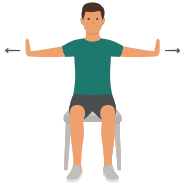
Chest
Forearms on a door frame, step 1 foot through until you feel a gentle stretch across the chest. Hold 20 to 30 seconds.
20 to 30 seconds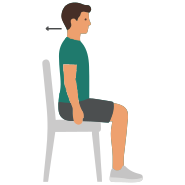
Neck
Slide your chin straight back, as if making a double chin, then release. 10 slow repetitions. It reminds your head where over your shoulders is.
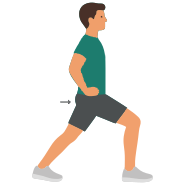
Lower back
Half-kneeling, back knee on a cushion, shift your weight gently forward until the front of the back hip stretches. 20 to 30 seconds per side. Tight hip fronts are what make a tall stride feel impossible.
20 to 30 secondsHands on thighs, push your hips back, chest forward, then stand tall. 10 slow repetitions to wake up the back of your body.
None of this needs equipment or a mat. The point is not intensity, it is giving the stiff spots a daily reminder that they can move.
If your lower back nags on walks, the instinct is to blame how you are standing. Usually the better suspects are more ordinary: going from a full day of sitting straight into a long walk, striding out too far, or gripping your trunk stiff because you are bracing against the ache.
A lower back that eases as the walk goes on is a good sign. A back that gets steadily worse with every step is asking for a different approach, see the note below.
When this is not for you and it is time to see a healthcare professional. This guide is for everyday stiffness and discomfort, not for everything. See a healthcare professional if walking makes the pain steadily worse instead of better, if pain runs down a leg, if you feel tingling, numbness or loss of strength, if the discomfort started after a blow or a fall, or if the pain keeps you from sleeping or has not changed at all after a few weeks of regular movement.
You do not need to remember all of it. You need a small loop you actually run.
Walking tall is not a position you hold. It is what a body that moves every day ends up doing on its own.
BackPain gives you 5 minutes of gentle exercises a day, chosen by where it bothers you and what you are after. At home, no equipment, guided one at a time. If there are exercises you like more, build your own routines with them: the best exercise is the one you will actually do.


7-day free trial · Cancel anytime
Indirectly, yes. Walking does not force your spine into a shape, but it breaks up long sitting and takes your hips, back and shoulders through thousands of gentle repetitions. Over weeks, standing and walking tall takes less effort because the body is moving regularly. The walk is the work, the posture follows.
Tall and relaxed, not rigid. Head balanced over your shoulders, eyes on the horizon, shoulders down and loose, arms swinging naturally, and steps landing under your body rather than far out in front. If it feels like effort to hold, you are forcing it.
Stop trying to hold a position and use 1 cue per walk instead. Grow 1 cm taller is the best starting cue, because everything else reorganises around it. Attach it to landmarks, like every street crossing, and after a week it starts happening without you.
Posture alone is a poor explanation, some people slouch without pain and others stand very straight and hurt. What more often nags on walks is overstriding, a stiff braced trunk, or going from a full day of sitting straight into a long walk. Shorter steps, a slow first 5 minutes and a gentle warm-up usually ease it.
There is no magic number, and the dose can be split. If 45 minutes in 1 go feels like too much, 3 walks of 15 minutes count just the same. Regularity matters more than length, a short daily walk beats a long weekly one.
BackPain is a wellness app, not a medical device. This guide is general information and is no substitute for a healthcare professional. It does not diagnose, treat, cure or prevent any condition. If your pain persists, see a healthcare professional.